Easy to Moderate
Valley of Flowers Trek
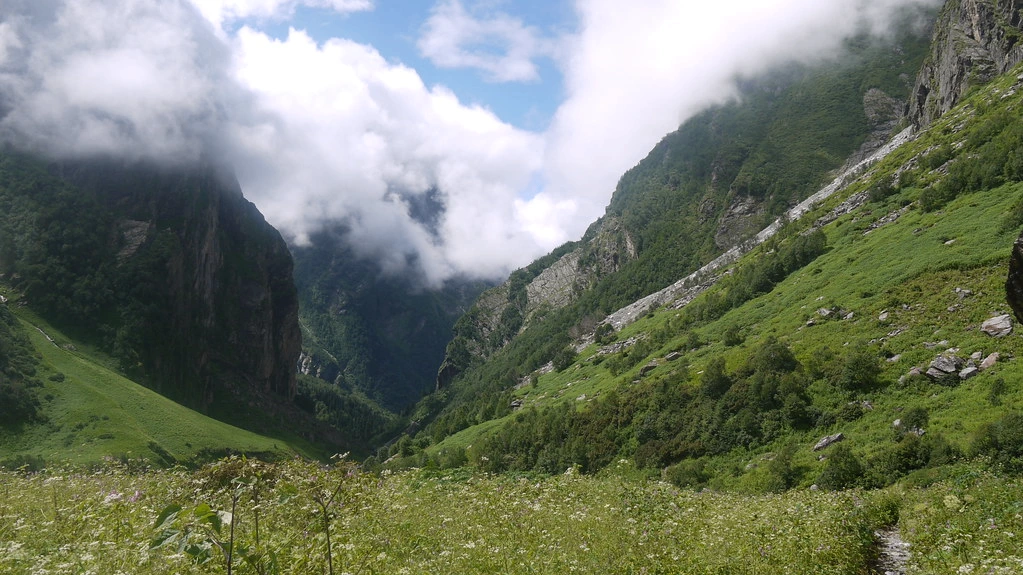
A spectacular Himalayan trek in Uttarakhand, renowned for its colourful alpine flowers, lush green landscapes, cascading waterfalls, mountain streams, and dramatic snow-clad peaks.

Days
6
Adventure Type
Trekking
Base Camp
Pipalkoti
Season
Monsoon
Month
June | July | August | September
Country
India
Altitude
14100 Ft.
Grade
Easy to Moderate
Rail Head
Haridwar/Rishikesh is the nearest rail head to the base camp
Stay
Triple or Dormitory basis only(Separate for male & Female)
Food
Veg meals while on trek & at Hotel/Guesthouse
Location
Uttarakhand
Distance
37 Km.
Trail Type
Point to point trail | Camping at the same location upon returning.
AirPort
Jolly Grant Airport, which is 21 km away from Rishikesh
The Valley of Flowers Trek is nestled in the vicinity of the Nanda Devi Biosphere Reserve and its multitude of blooming flowers covering the vast expanse of land makes the valley of flowers one of the most beautiful Himalayan treks our country has to offer. Stretched to an expanse of 87.5 square kilometers with an altitude of 14,200 ft, the valley of flowers trek is popular among all kinds of trekkers.
The sheer beauty that the rich biodiversity offers attract many avid nature lovers and the steep ascents and descents allow trekkers to relish in the experience of commencing this Himalayan trek and tick it off of their bucket list. With the Hemkund Sahib awaiting on the other side of the trek, many pilgrims embark upon the valley of flowers trek as well. Being one of the oldest known treks, The valley of flower trek came on every trekker’s radar all over the world when it was declared a world heritage site by UNESCO in 2002.
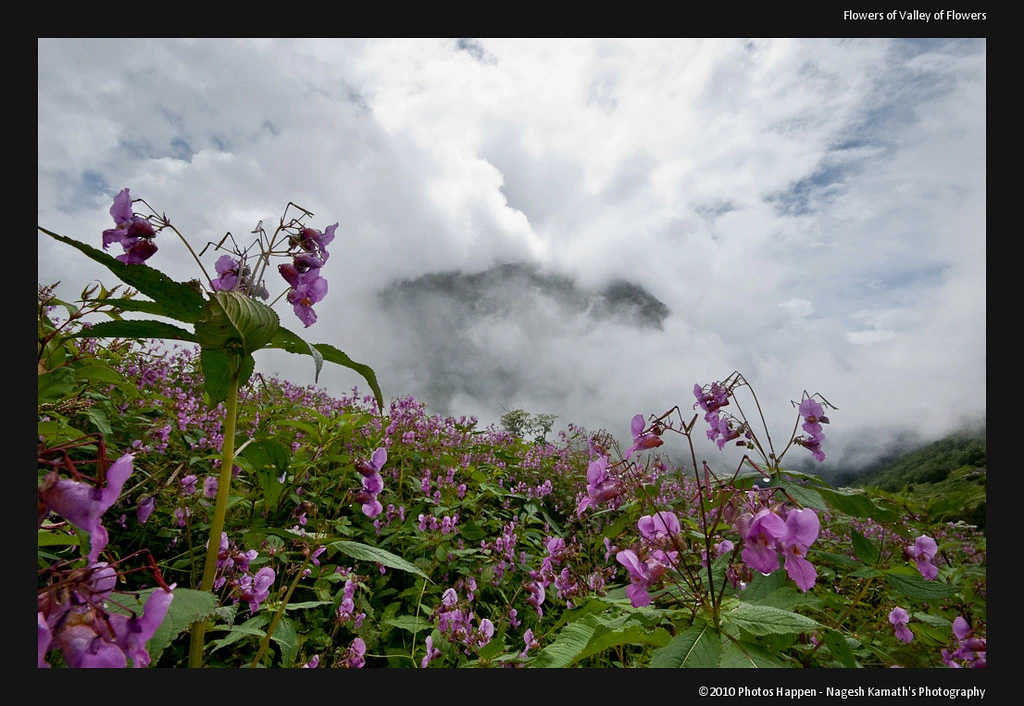
The valley is home to more than 520 species of flowers that come together to form a tapestry of colors in front of you with dominating shades of pink, blue and purple. The valley of flowers national park is located in the Chamoli district of Uttarakhand and along with being home to a diverse range of flora, it is also home to many endangered animals including snow leopards and red foxes. Nestled at an altitude of approx 12,000ft, The Valley of Flower National park along with Nanda Devi National park come together to form a transition zone between the mighty Himalayas and the Zanskar range of mountains.
The valley of flowers trek comes under the easy to moderate category when it comes to grading the difficulty level and is considered to be a perfect trek for beginners and even a great trek for families. The hardest climb is the one to Hemkund Sahib Gurudwara which is the highest Gurudwara in the world and one of the most important pilgrim sites in Uttarakhand. The valley itself stretches to a length of almost 10 kilometers, with colors of rainbows speckled across the patchwork of grass, compelling you to stop and look at them closely.
The scent of flora lingers in the air and is hard to miss as you keep traversing through the valley, walking on the narrow path that cuts across the flower beds to make way. In this valley of flower trek itinerary, we start our journey with an 8-hour drive from Rishikesh to Joshimath which is the base camp for the Valley of flowers trek. Though the drive can seem strenuous, the beautiful scenery that accompanies you provides you a glimpse at four of the Panch Prayag which are five holy sites of the confluence of the river Ganga namely – Devprayag, Rudraprayag, Karnaprayag, and Nand Prayag will surely this drive a visual treat for your eyes.
Upon reaching Joshimath, we will check into our lodgings and retire for the night. The next day, we drive from Joshimath to Pulna village which is the starting point for the valley of flower trek. Upon reaching there, we start trekking to Ghangaria. We gradually ascend on a stretch of a 9-kilometer route with the Pushpawati river flowing alongside. The trek is considered to be of the easy to moderate category with the uphill route consisting of stone-carved paths and steep ascents testing your endurance slightly as you walk up to your next campsite, Ghangaria village which is located at an altitude of 10,000ft.
The trail is lined with many small dhabas so you will have plenty of resources to refill your water bottles and get snacks as you move forward. After walking for almost half of the distance, you will be able to see the Hathi Parvat ranges in front of you. From there on the climb is steep and you’ll be required to maintain proper footing until you reach your campsite. The next day you will be able to traverse through the valley of flowers. But before that, you have to cover at least a stretch of 4 kilometers of land. As you keep walking for at least 10 minutes, you will stumble upon the Laxman waterfall which gushes streams of sparkling water, the sight of which will surely refresh you. After a few minutes, you will reach the forest check post, from where you can buy tickets.
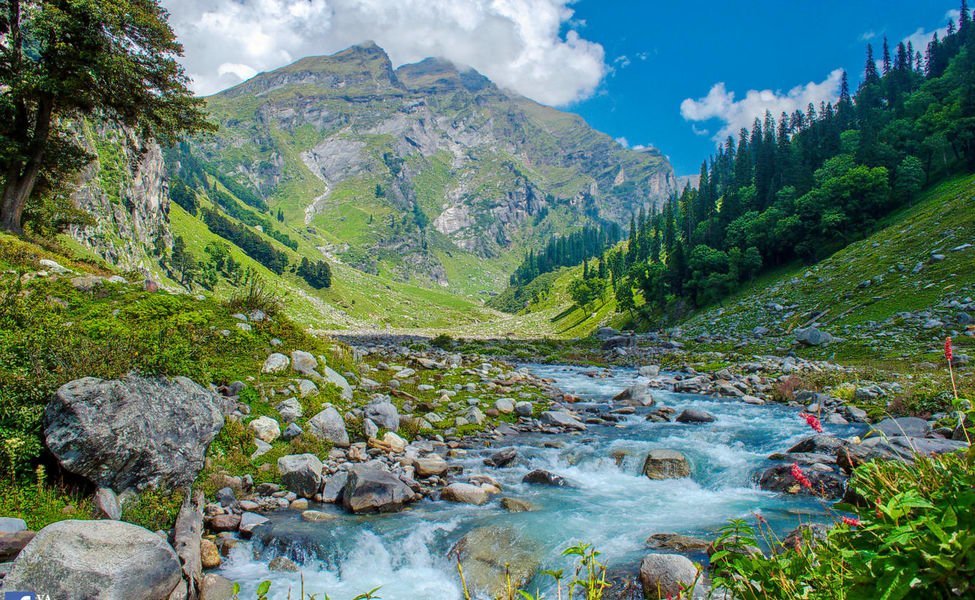
The check post signifies your proximity to another marvel of nature in the form of a wooden bridge that is perched upon the Pushpavati river. No sooner after you have crossed the bridge, mountains will start peeking from behind. Every direction that you take will seem like a natural paradise because all colors of the rainbow are now on the ground in the form of blooming flowers.
The difficulty level of the valley of flowers trek becomes easier here as you have to walk flatly throughout the valley. Adorning the Himalayan peaks with different hues belonging to native flowers like poppies, Himalayan roses, geraniums, etc.
The flowery carpet will end after a 5-kilometer stretch at a glacier but the sight of the majestic Himalayan peaks of Nilgiri Parvat, Bhyundar Khal, Rattan, Gauri Parvat, etc still make the view picturesque with a cold stream of water flowing throughout. Eating and camping in the valley aren’t allowed so you will have to head back to Ghangaria and retire for the night. The hardest part of the valley of flowers trek commences the next day as you head out for Gurudwara Hemkund Sahib, nestled at an altitude of 14,107 ft, it is the highest Gurudwara in the world.
The six-hour-long trek from Ghangaria to Hemkund Sahib is challenging in more than one way, the first one being that in a matter of a few hours, you gain an altitude of 5,000ft and the scenic views are replaced by steep descents making the climb rather strenuous. As you keep walking, you will be able to look over the entire valley of flowers and soon a cascading waterfall will come into view. You’d be able to feel the low oxygen levels as you gradually ascend, and that is your cue to keep drinking water as much as you can.
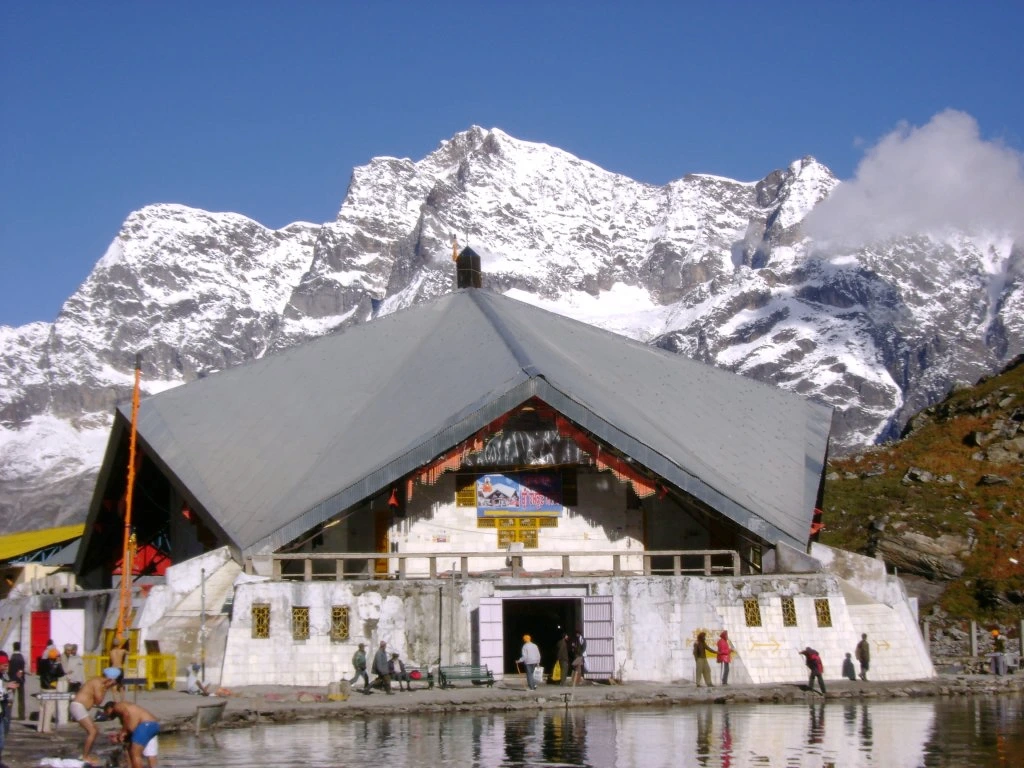
After traversing on stone-paved pathways and stumbling upon melting glaciers, Gurudwara Hemkund Sahib will bless you with the Hemkund lake right by its side, mirroring its pristine beauty. All your efforts will feel worth it once you have a cup of hot piping chai and a mouthful of khichdi that is distributed during the Langar. As you stroll on the premise, you’d feel a sense of peace that you won’t find anywhere else.
The lake, which is formed by the melting glaciers of Hathi Parvat and Saptarishi peaks, reflects the grandeur of the mountain as well. When the skies are crystal clear, you get a view of the Saptarishis peaks beckoning you closer while on the lakeside, rare flowers like the Brahma Kamal add more charm to the beauty of Hemkund lake. On a clear day, you will be able to glimpse at the Himalayan peaks of Nilgiri Parvat, Bhyundar Khal, and Gauri Parvat as well. A temple dedicated to Laxman, Lord Rama’s brother is also situated near the lake and you can pay your respects there as well.
You will soon have to descend and the 7-kilometer walk can put a strain on your muscles. The next day is relatively easier as the descent to Pulna village would feel easier than the steep uphill climbing of the previous day. The trail is lined with enough dhabas and snack shops making it even easier to descend and in no time you’d have reached the base from where we’d be driving to Joshimath commencing our valley of flowers trek. Being one of the most well-known treks in the Indian Himalayas, the Valley of Flowers trek is quite safe. It has well-laid trails frequented by pilgrims.
However, one needs to be careful on the slippery sections of the trail, especially during the rainy season. The best time to do the Valley of Flowers trek is in July and August when the blooming of flowers is at its peak. The prominent species of flowers that avid nature lovers find here are Brahmakamal, Blue Poppy, Cobra Lily Anemone, Geranium, Marsh Marigold & Primula. Also, the valley has to offer much more than flowers. There are waterfalls, glaciers, towering mountains, gushing rivers, and quaint villages, not to mention an abundance of peace

Tax Benefit
+5% GST (goods and services tax)
Services
Rishikesh to Rishikesh | Included Transport.
Meeting Point
( Pickup/ Drop Point ): Rishikesh
Reporting Time
6:00 am
Drop Time
6:30 pm to 7:30 pm (Timings are subject to change based on weather and road conditions).
Important
Please reach Rishikesh a day before to avoid any delays.

Scenic Landsacapes
Diverse Flora
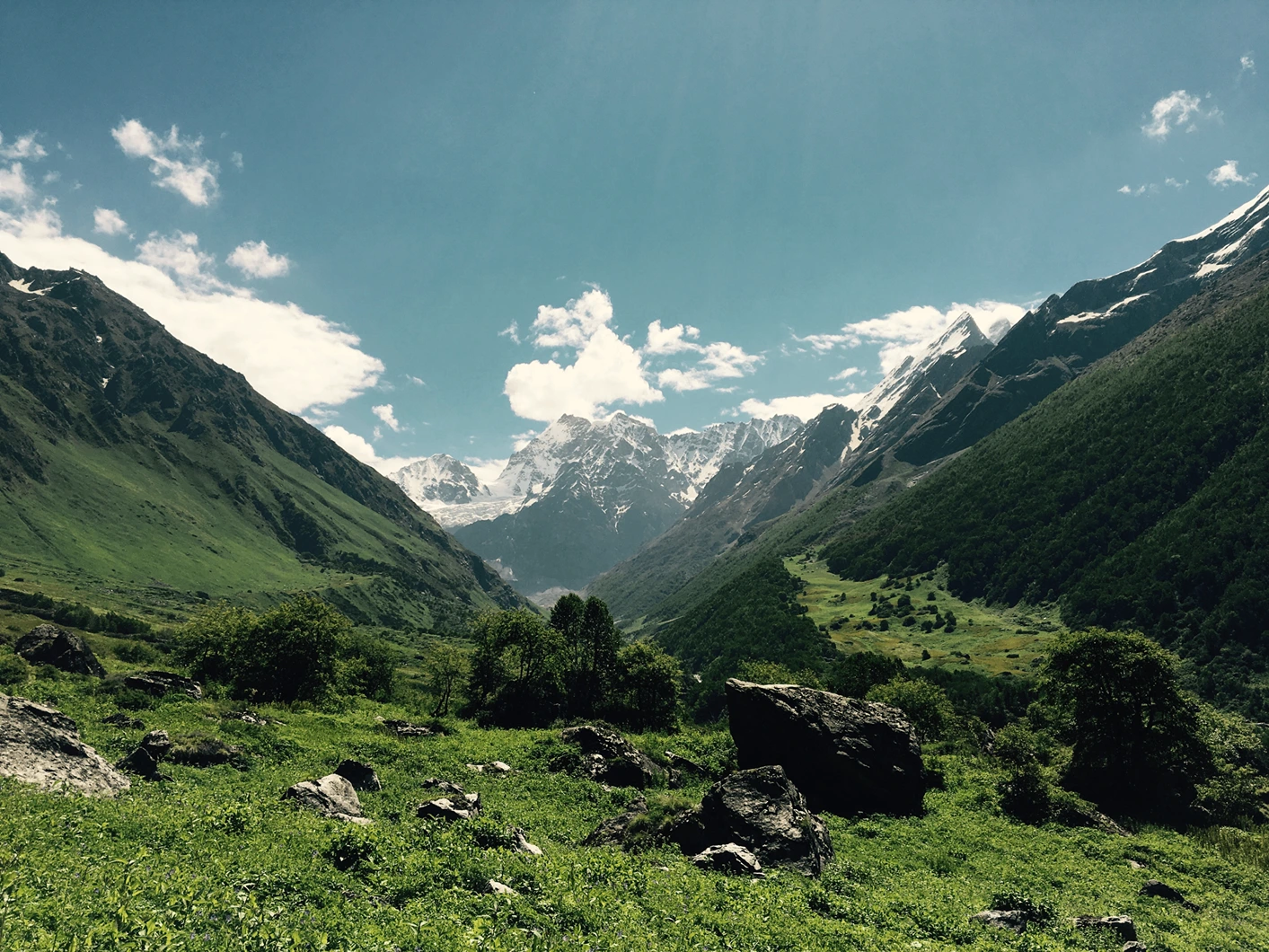
Alpine Meadows
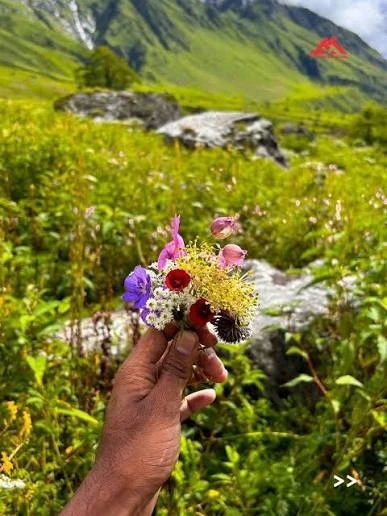
Photogenic Places
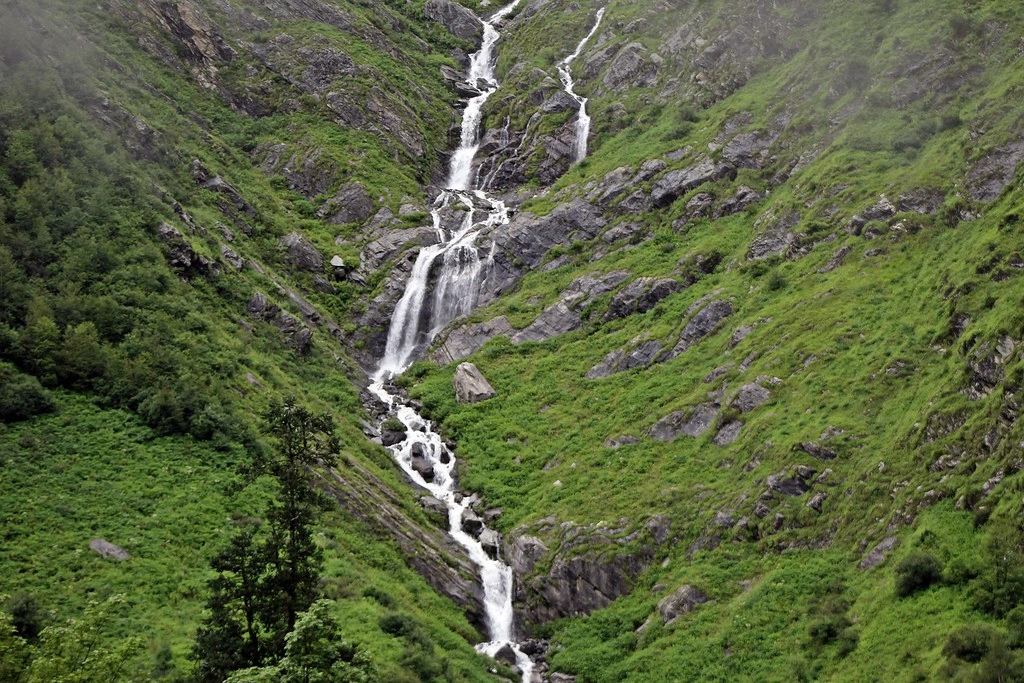
Bhyundar Valley & Waterfalls
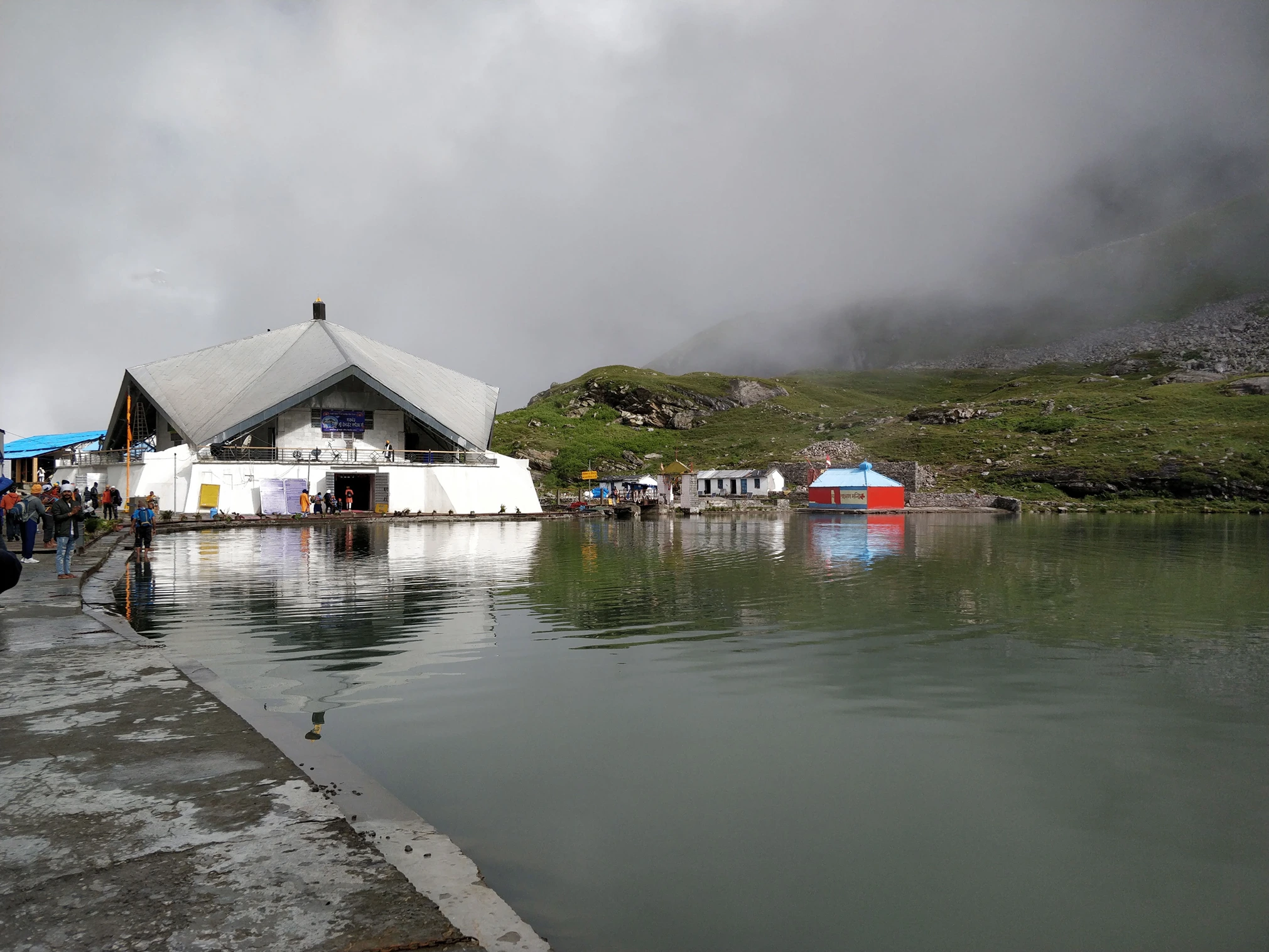
Hemkund Lake
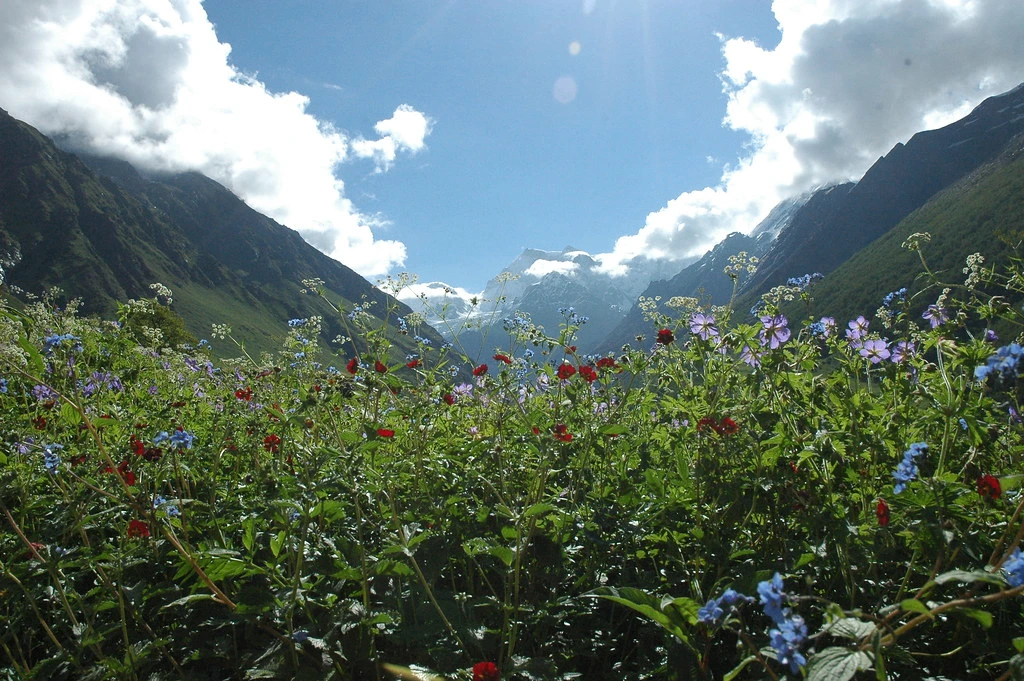
Valley of Flowers National Park
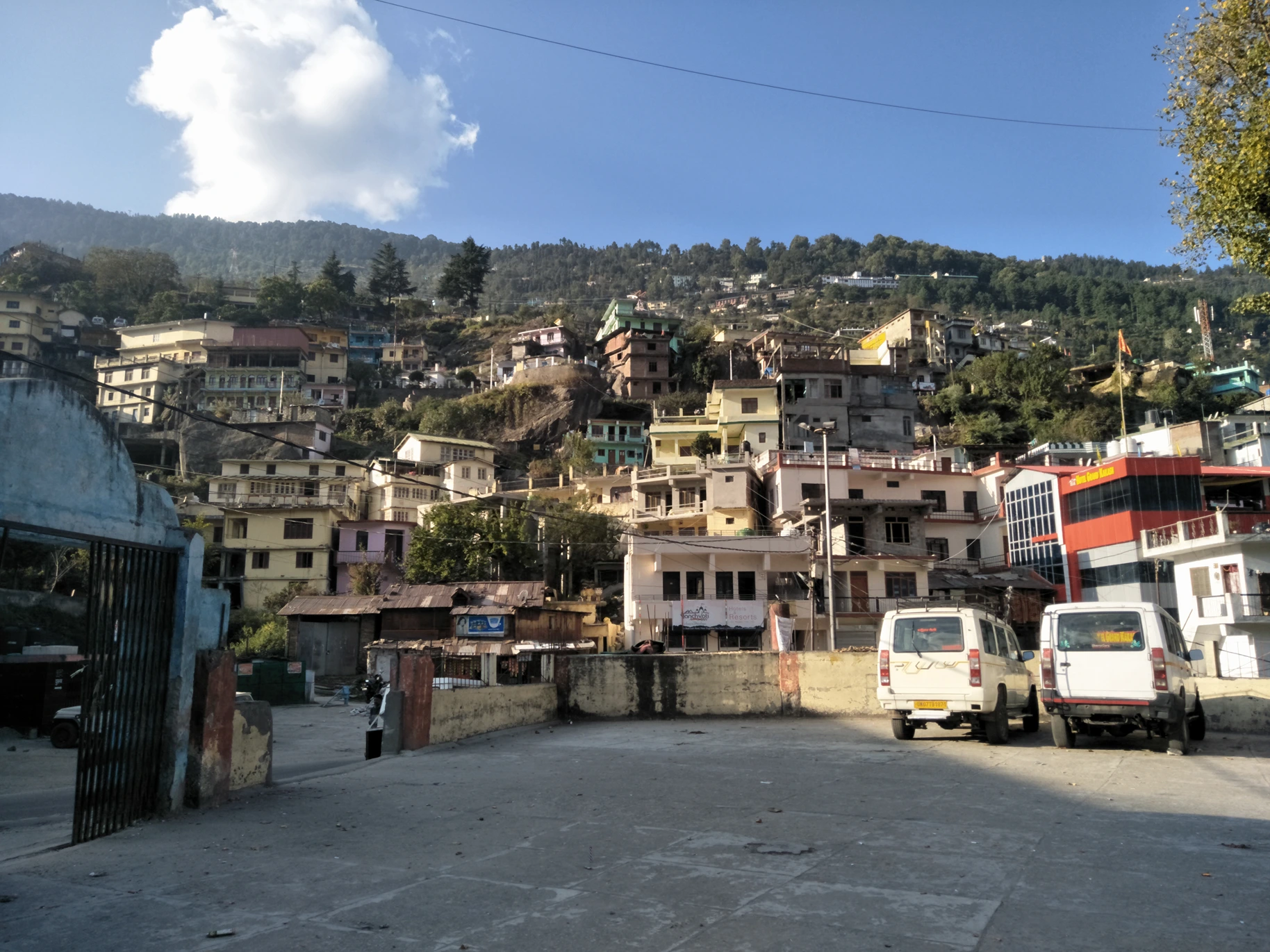
JOSHIMATH
01
DAY
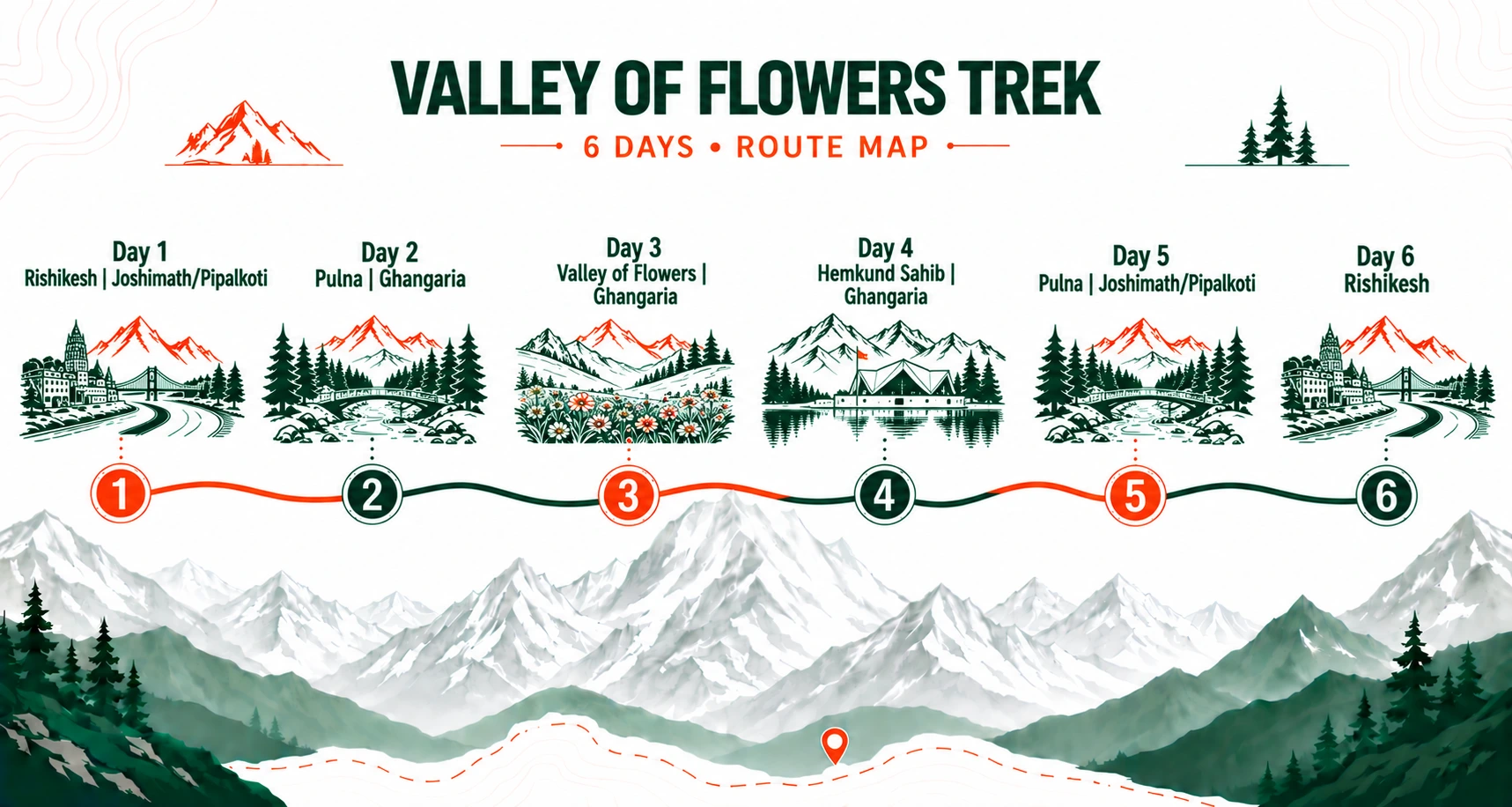
Rishikesh to Joshimath/Pipalkoti (253 Kms, 8 Hrs Drive)
- The group will assemble at the pickup point at 06:30 AM.
- On our journey from Rishikesh to Joshimath/Pipalkoti, we’d be traversing the Badrinath road with a picturesque view of the four confluence of the Ganga river, which includes Devprayag, Rudraprayag, Karnaprayag, and Nand Prayag.
- You’d also be seeing the Alaknanda river flowing alongside, making your long journey ten times better.
- Upon reaching Joshimath/Pipalkoti, we will have dinner and spend the night at our designated hotel.
- Note: The pickup point is Natraj Chowk / Tapovan Chowk (tentative).
02
DAY
Joshimath/Pipalkoti to Pulna (22 Kms, 1 hour Drive) | Trek to Ghangaria (9 Kms, 5 Hrs trek)
- After early morning breakfast, a small briefing session would be provided where all the necessary details about the Valley of flowers trek would be shared. After which, we will head towards Pulna which is the starting point of this trek.
- Upon reaching Pulna, which is 22 kilometers from Joshimath/Pipalkoti, we will start trekking toward Ghangaria village which is nestled at an altitude of 9,800ft. It takes almost five hours to reach the hotel and you are walking along the river for the most part of the trek. Dhabas and shops line the trail, making it easier for trekkers to refill their water bottles and get refreshments as well.
- The trail soon becomes tabular, signifying that you are about to reach your destination. Upon reaching Ghangaria village, we will stay in the village and have dinner before retiring for the night.
03
DAY
Ghangaria to Valley of flowers | Back to Ghangaria (10 Kms, 7 Hrs trek)
- Post breakfast, we’ll head towards Valley of Flowers National park. All the necessary details about the trekking trails for the rest of the day will be shared by the trek leader
- The trekking trail from Ghangaria is long and you attain a significant amount of altitude as you go from an elevation of 9,600 ft to 11,500 ft and yet the trek is relatively easier because of the flat walk.
- Upon reaching the forest check post, you will get tickets to enter the valley and from there on you will get to witness the beauty of more than 300 species of bloomed flowers in front of you. The valley stretches up to 6-7 kilometers of land ending with a glacier.
- Since camping isn’t allowed and neither is eating, after spending a considerable amount of time relishing in the beauty of nature, we will head back to Ghangaria where we will have dinner and stay the night.
04
DAY
Ghangaria to Hemkund Sahib (14 Kms, 9 Hrs) | Back to Ghangaria
- After breakfast, we will head out for a trek to the Hemkund Sahib, which is the world’s highest Gurudwara at an altitude of 15,200 ft. You gain an altitude of 4,000ft in just seven hours.
- The trail is steep and consists of a stone-paved uphill route making this part of the trail harder to walk upon. However, some porters and mules will offload your baggage for you, and shops lining the trail make it easier for you to get refreshments as well.
- Upon arrival, we will pay our respects at the Hemkund Sahib Gurudwara and visit the Hemkund Sahib Sarowar as well. You will get to glimpse at the Saptarishi peaks and experience spiritual peace on the premise.
- Sip on hot piping chai and devour the khichdi that is served in the Gurudwara. Afterward, we will descend to Ghangaria again where we will spend the night after having dinner.
05
DAY
Ghangaria to Pulna (9 Kms, 5 Hrs) | Drive to Joshimath/Pipalkoti (22 Kms, 1 hour Drive)
- After early morning tea and breakfast, we will prepare for our descent to Pulna.
- The descent is the easiest part of the trek and soon you will reach the base. From here on we will drive back to Joshimath/Pipalkoti .
- Upon arrival, we will check into our designated lodgings where we will have dinner and spend the night.
06
DAY
Joshimath/Pipalkoti to Rishikesh (253 Kms, 8 Hrs drive)
- After a refreshing morning tea, we will start the return journey to Rishikesh and will reach there by evening.
- The group will disassemble and part ways with fond memories.
- End of tour.

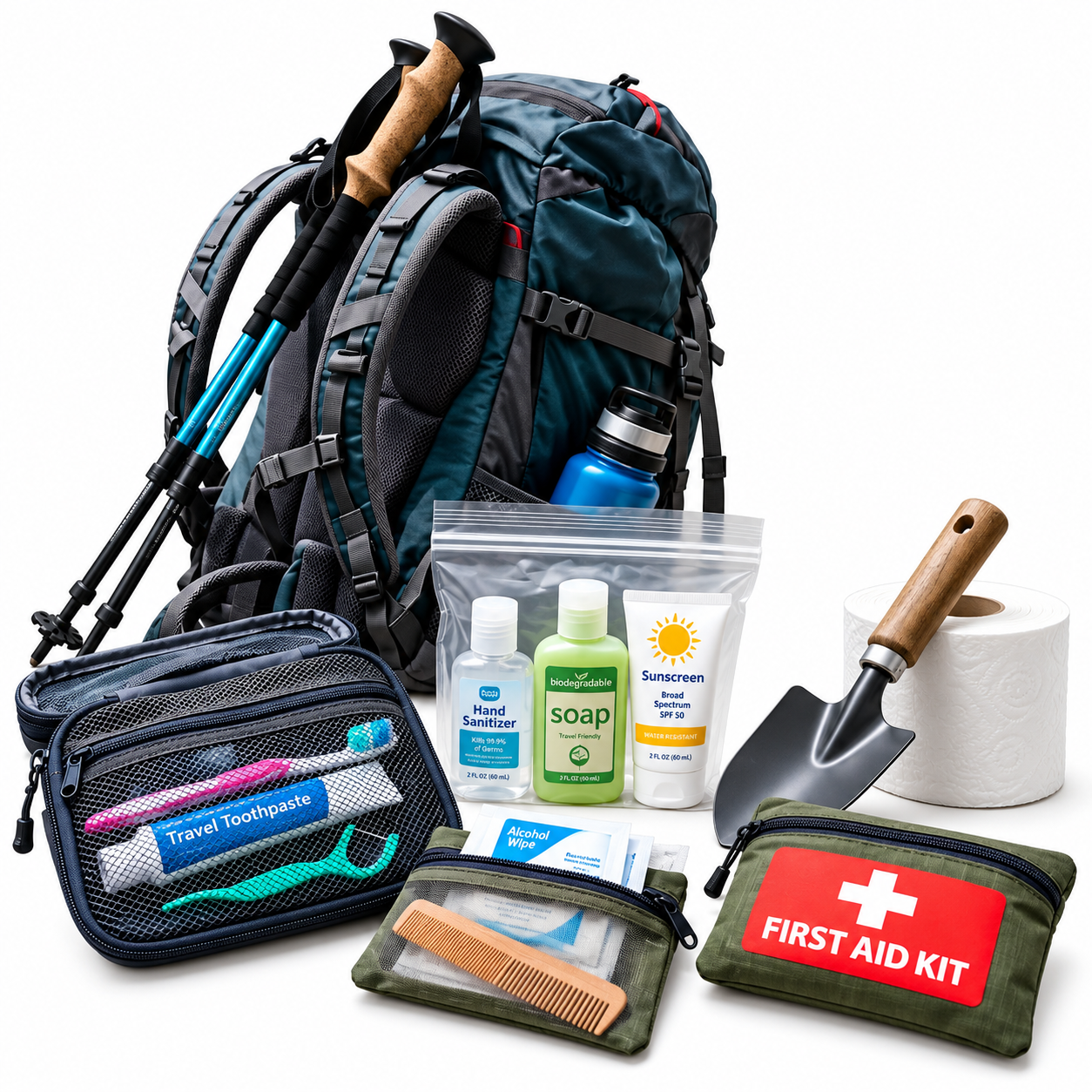
One of the most common questions before any Himalayan trek is simple: what should you pack? A smart packing list keeps you comfortable on the trail without making your backpack unnecessarily heavy.
The easiest way to pack is to go step by step, either from head to toe or toe to head. That simple pattern helps you stay organized and lowers the chance of forgetting essentials.
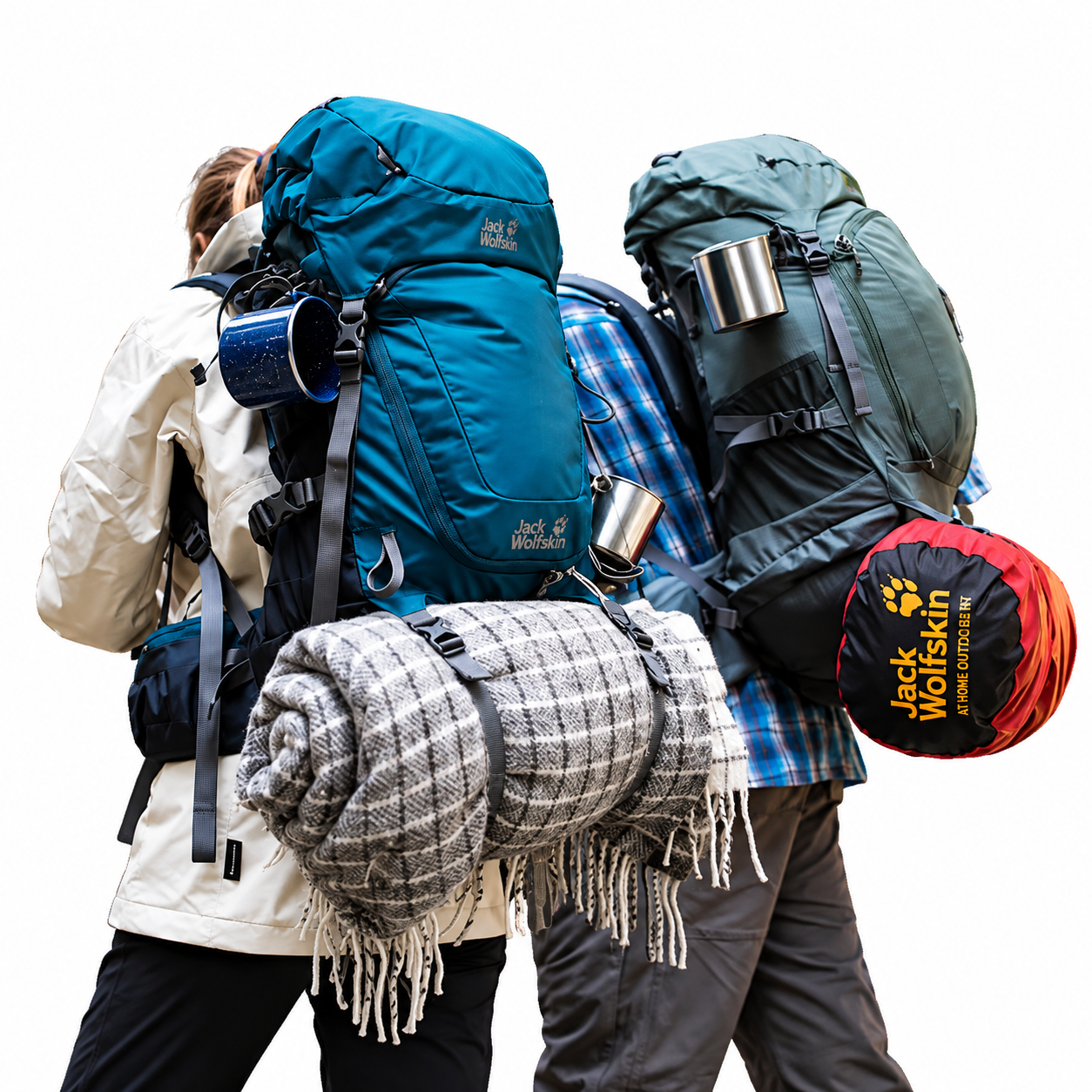
01 Backpacks
Choose a backpack that feels comfortable on your shoulders and hips. For a week-long trek, a 60 to 70 liter backpack is usually enough for your clothing, gear, and personal essentials.
- Main backpack: Good hip support, shoulder support, and easy-access pockets.
- Daypack: Useful for short hikes, sightseeing, and carrying daily essentials when the main bag is not needed.
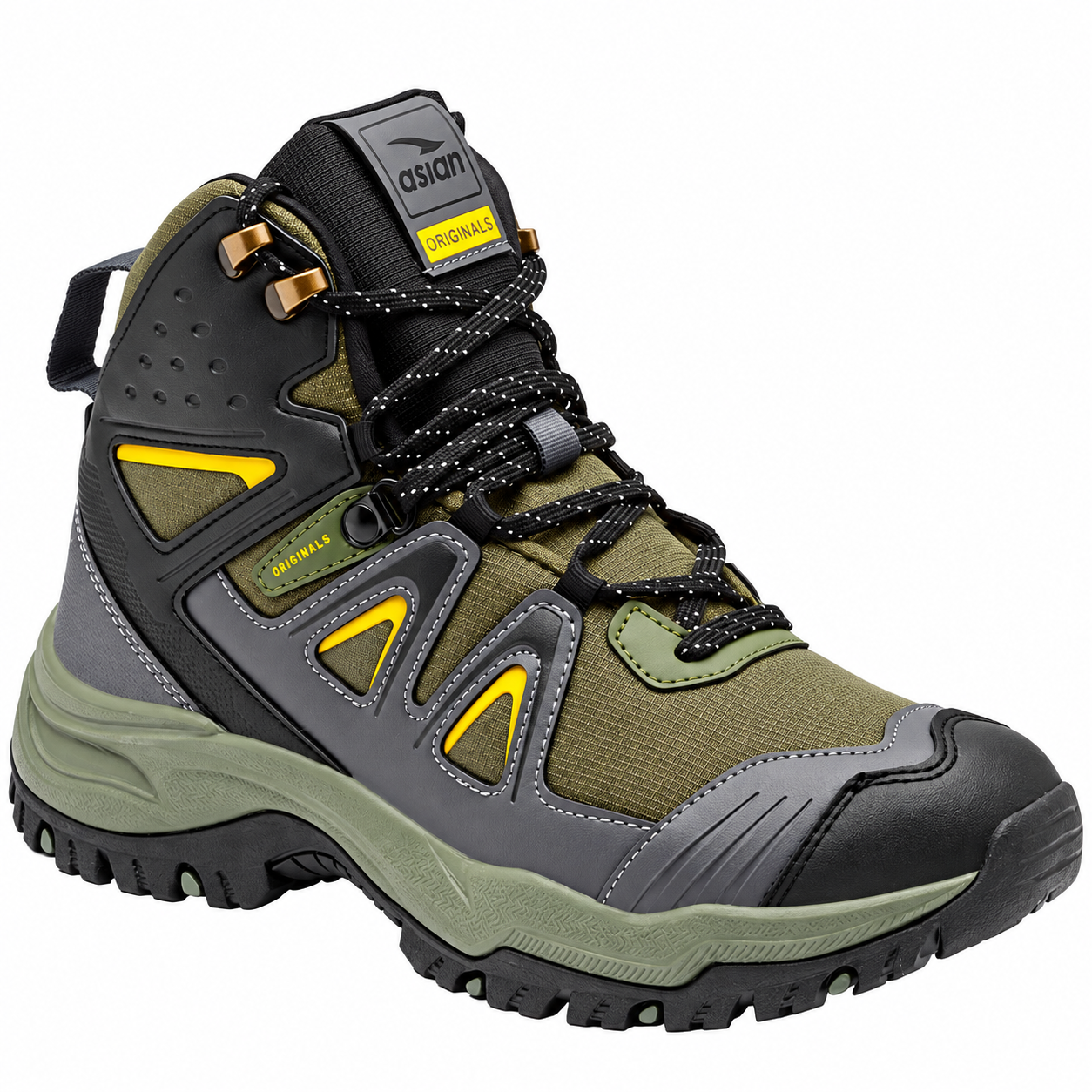
02 Footwear
- Trekking shoes: Prefer waterproof shoes with high-ankle support.
- Walking or hiking sandals: Great for camp use, resting your feet, or stream crossings.
- Sneakers: Optional, but useful for travel days or relaxed time around camp.
- Socks: Carry 3 to 5 pairs that are warm, comfortable, and quick-drying.
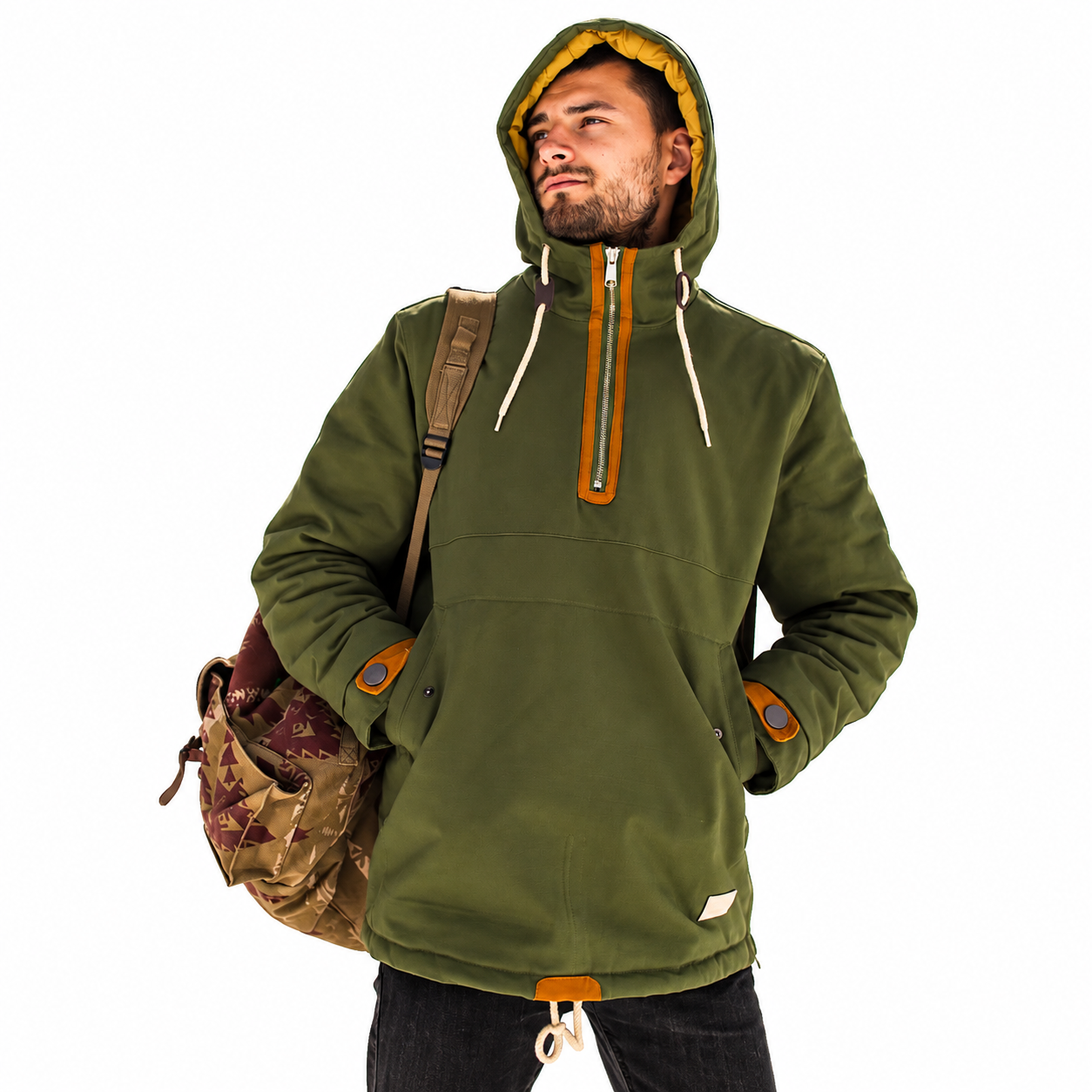
03 Clothing Layers
- Jacket: A good quality hiking or trekking jacket for layering.
- Pants: Lightweight, quick-drying trekking pants, plus a warm lower layer for colder nights.
- T-shirts and base layers: Carry 3 to 4 warm, comfortable tees along with a long-sleeve layer.
- Thermals and leggings: Two pairs of thermals and warm leggings are ideal for cold mornings and evenings.
- Undergarments: Pack according to your personal requirement.
- Buff or balaclava: Essential for protecting your neck and throat from wind and cold.
- Beanie cap and hiking hat: A beanie helps in cold weather, while a sun hat protects you during the day.
- Gloves: One warm pair is usually enough.
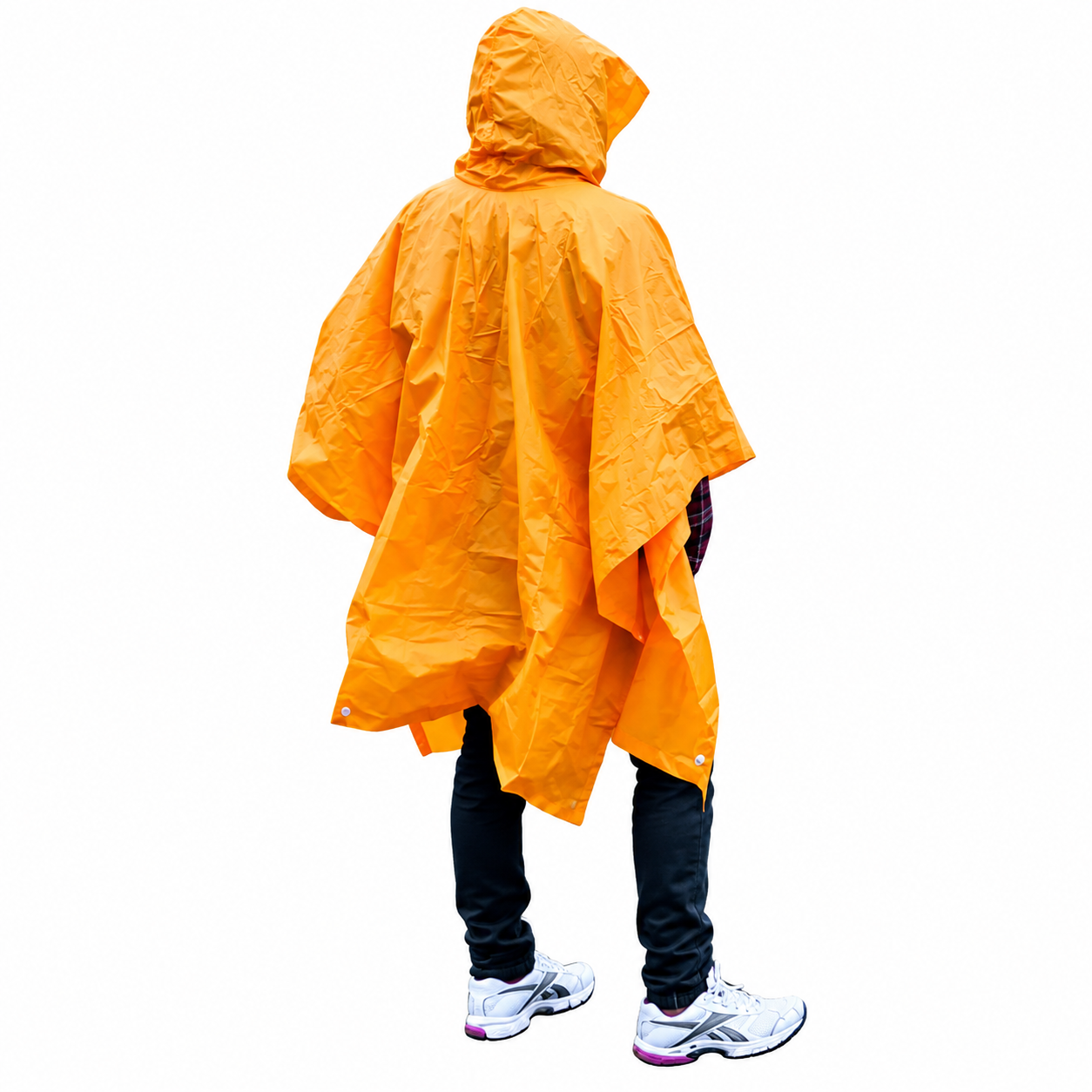
04 Rain Protection
- Raincoat and rain pants: Helpful in changing mountain weather.
- Rain poncho: A practical option during longer spells of rain.
- Rain covers: Carry waterproof covers for both your backpack and daypack, especially for gadgets.
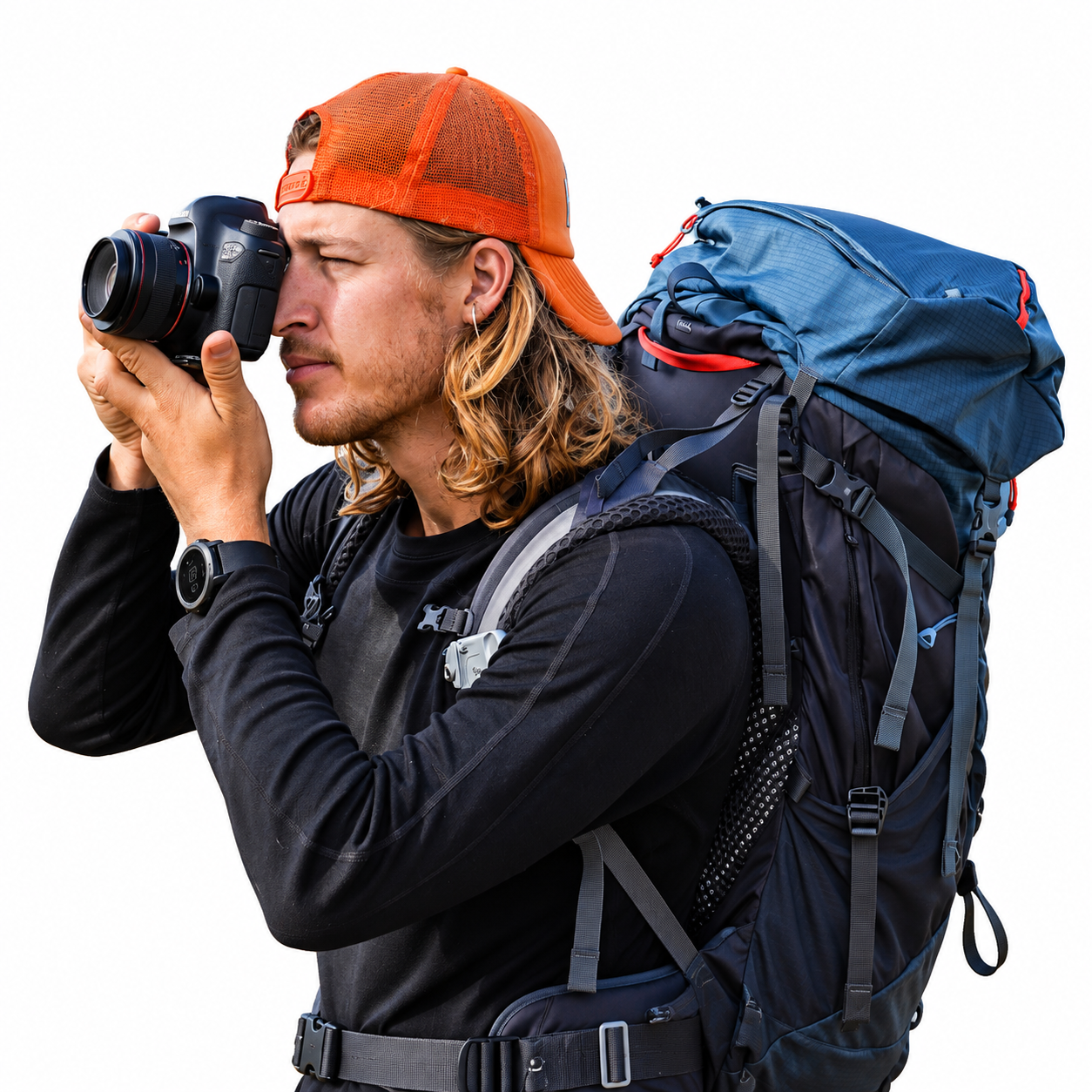
05 Gadgets and Useful Extras
- Trekking poles, mobile phone, camera, and spare batteries.
- Power bank, lightweight flashlight or headlamp, and waterproof ziplock bags for electronics.
- Plug or converter, sunglasses, and a 1 liter water bottle.
- A journal and pen, a good book, and a map or guidebook if you enjoy documenting the journey
06 Hygiene and Toiletries
- Sunscreen with UV protection and lip balm or salve.
- Quick-drying towels, toilet paper, tissues, or wet wipes.
- Toothbrush, toothpaste, mouth freshener, shampoo, deodorant, and talcum powder.
- Biodegradable soap, nail clipper, and any personal daily-use items.
- Sanitary pads or tampons if needed.
07 First Aid and Energy
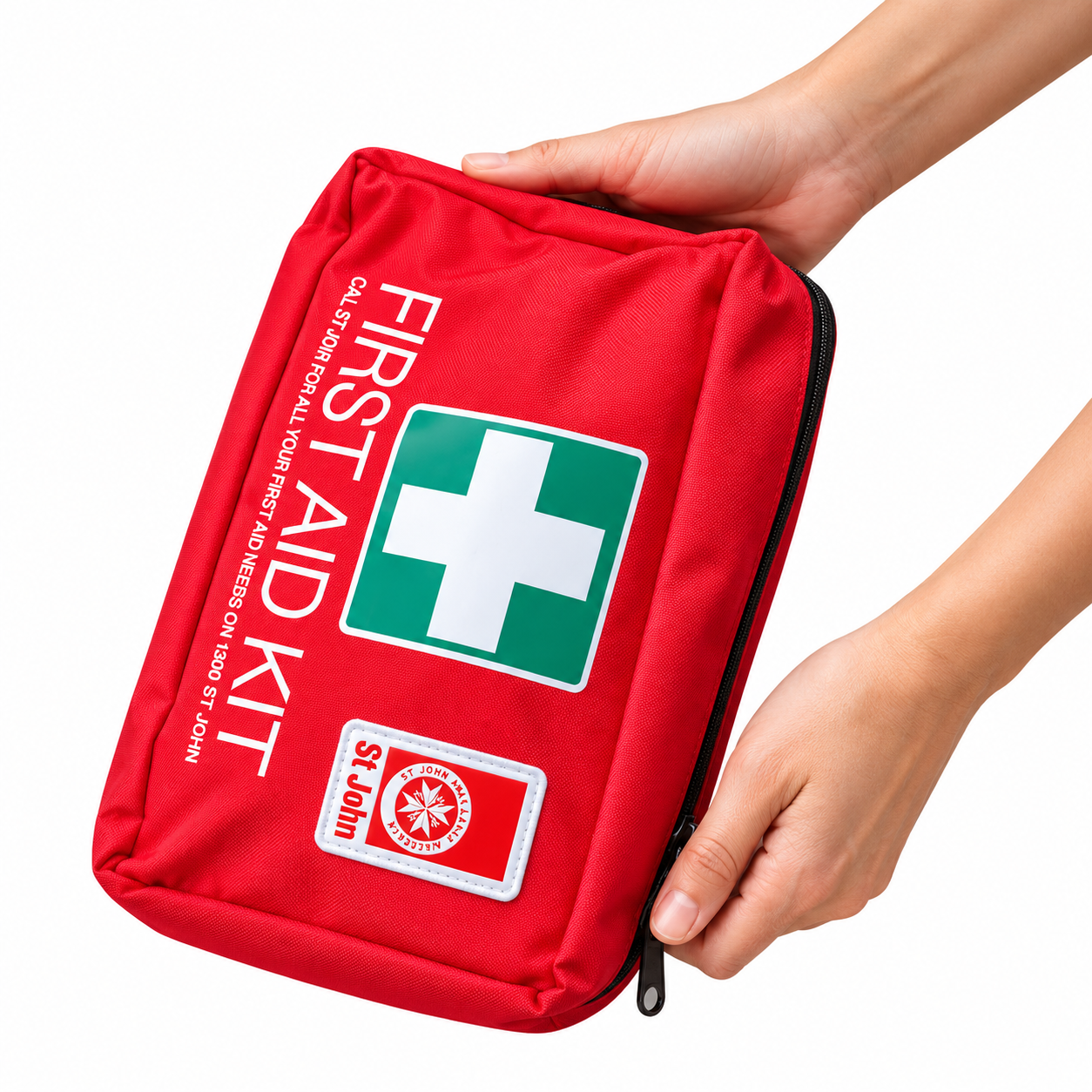
Carry a personal first-aid kit with the basics you may commonly need on an adventure trip, and always consult your doctor before taking any medicine.
- Antiseptic wipes or water syringe, butterfly bandages, sterile gauze pads, and elastic bandages.
- Latex gloves, medicines for upset stomach, cold, flu, fever, headache, and basic pain relief.
- ORS sachets, pain relief spray, bug repellent, and any prescription medicines you already use.
- Medicine for high altitude concerns such as Diamox or a similar alternative, only after medical advice.
- Carry some energy bars and non-alcoholic energy drinks for quick support on the trail.
Important note: Check what gear can be rented or purchased through BookMyHikes and what you should bring from home. Keeping your backpack light makes the trek more comfortable and enjoyable.

Inclusions
- Accommodation:2 Nights of Accommodation in a hotel in Joshimath, and 3 Nights of Accommodation in a hotel in Ghangaria on a Triple/Quad Sharing basis.
- Transportation:Surface transfer from Rishikesh to Rishikesh
- Meals:All Veg meals from Day 1st Dinner to Day 6th Morning Tea. (Day 6 Breakfast not included)
- Snacks:Morning / Evening Tea / Coffee with light snacks.
- Trek Leader:Qualified and Experienced Trek leader and support staff.
- Permits:All necessary fees and permits.
- Safety Equipment:Basic First Aid kit with Oximeter and Oxygen Cylinder.
- Guide ratio:1:10
Exclusions
- Meals during transit.
- Insurance of any kind.
- Any fees and permits (For Foreigners).
- Unscheduled delay due to a landslide.
- Anything not mentioned explicitly in the above program.
Note: You can apply for travel insurance prior to the trek.
Note: Bag offloading cost is Rs 1000 (maximum weight should not be more than 10 kg)

Life is unpredictable and we understand sometimes you have to cancel or change your trip dates and it is our endeavour to make it as easy possible for you. However, please understand we plan everything including guide fees, permits, accommodation and ration in advance. Therefore, any cancellation means inconvenience and certain losses to the people involved in various stages of programme. Keeping that in mind, our cancellation charges are as below :
Cancellation Timeline
-
30 days before the event Best cancellation window with the lowest deduction.Deduction 15% Lowest cutReturn 85% Monetary Refund Into original payment mode
-
15-30 days before trek start Moderate cancellation window before core ground arrangements intensify.Deduction 50% Mid-stage cutReturn 50% Cash Voucher Valid for 12 months
-
Less than 15 days before trek start Late cancellation window after trek operations are mostly aligned.Deduction 100% Higher cutReturn No Refund
Voucher Rules
After applicable cancellation deductions, the remaining amount is refunded only in the form of a trek voucher. The voucher can be used for any trek, tour, or yatra booked with BookMyHikes.
The trek voucher is valid for 12 months from the date of issue.
The voucher must be used for the same number of persons for whom it was issued.
The voucher cannot be redeemed as a cash refund and cannot be extended beyond its expiry date.
To redeem a voucher, email BookMyHikes 15 to 20 days before the new trip date.

What is the difficulty level of the Valley of Flowers Trek?
The trek is generally considered easy to moderate. The trail is well-defined, but multiple trekking days, changing weather, and altitude require reasonable physical fitness.
What is the best time to visit the Valley of Flowers?
The trekking season generally runs from June to October, while July to September is particularly popular for seeing the valley covered with blooming alpine flowers.
What is the maximum altitude of the Valley of Flowers Trek?
The Valley of Flowers trail reaches roughly 12,000–12,650 ft, depending on how far you explore inside the valley. If the itinerary includes Hemkund Sahib, trekkers ascend considerably higher to around 14,100 ft.
How many days are required for the Valley of Flowers Trek?
A typical itinerary takes approximately 5–6 days, especially when the journey includes both the Valley of Flowers and Hemkund Sahib.
Is the Valley of Flowers Trek suitable for beginners?
Yes. It is a popular choice for fit beginners, although trekkers should prepare for sustained uphill and downhill walking and potentially wet conditions during the monsoon season.
What is special about the Valley of Flowers Trek?
The trek is famous for its seasonal alpine flowers, rich biodiversity, waterfalls, green valley landscapes, and Himalayan scenery. Its protected national park status and UNESCO recognition make it one of Uttarakhand's most distinctive nature-focused treks.

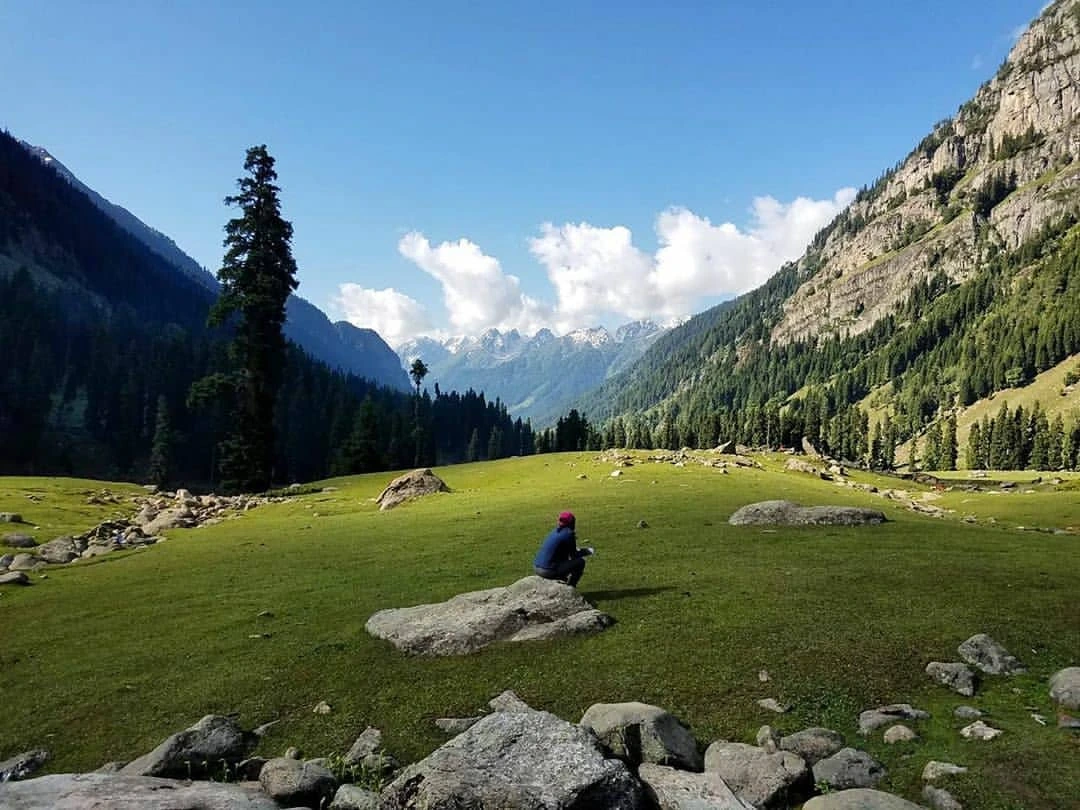
Tarsar Marsar Trek
Kashmir
7 Days / 6 Nights
Moderate
Nafran Valley Trek
Kashmir
7 Days / 6 Nights
Moderate to Difficult
Kashmir Great Lakes Trek
Kashmir
7 Days / 6 Nights
Moderate to Difficult
Chadar trek
Ladakh
9 Days / 8 Nights
Difficult
Gaumukh Tapovan Trek
Uttarakhand
8 Days / 7 Nights
Moderate to Difficult
Phulara Ridge trek
Uttarakhand
6 Days / 5 Nights
Easy to Moderate

Sar Pass Trek
“The whole Sar Pass experience felt smooth from planning to the last day. The team stayed helpful, calm, and very clear throughout.”
AR
Ananya RawatSar Pass Trek

Hampta Pass Trek
“The itinerary pacing was excellent and the support on trail felt dependable. Every pre-departure question was answered quickly.”
VS
Vikas SharmaHampta Pass Trek
Valley of Flowers
“What stood out most was the communication. Pickup details, stay plans, and trek expectations were shared very clearly.”
NK
Nidhi KapoorValley of Flowers
Tarsar Marsar Trek
“As a solo traveller, I was worried about coordination. The team made the whole journey feel smooth, safe, and well paced.”
PS
Priya SethiTarsar Marsar Trek
Pin Parvati Trek
“The planning support was excellent and the trek crew handled everything with confidence. It felt organized without losing the adventure feel.”
RG
Rohan GuptaPin Parvati Trek
Har Ki Dun Trek
“Every update came on time and the trip flow felt very easy to follow. Great communication before the trek and great energy on ground too.”
DM
Dev MalhotraHar Ki Dun Trek
Kedarkantha Trek
“This was our second trek with BookMyHikes and the consistency really stood out. Good support, clear expectations, and a super comfortable group experience.”
SK
Sana KhannaKedarkantha Trek
Brahmatal Trek
“As first-timers, we always felt looked after. The route briefing, camp support, and overall coordination made the trek feel very approachable.”
MT
Mehul TandonBrahmatal Trek
Credentials
Verified certifications for trusted mountain operations.
Registered for safer departures.